Most people spend a lot of time thinking about the design of their home and not nearly enough time thinking about what it’s made of. That tends to catch up with them.
Around Newcastle and Lake Macquarie, the conditions are harder on buildings than most people expect. Salt air near the water, hot summers, heavy rain, and the occasional hailstorm all do damage over time. The right materials handle that without much help from you. The wrong ones need constant attention.
Here’s what we’d recommend, and why.
Exterior Cladding
Fibre Cement
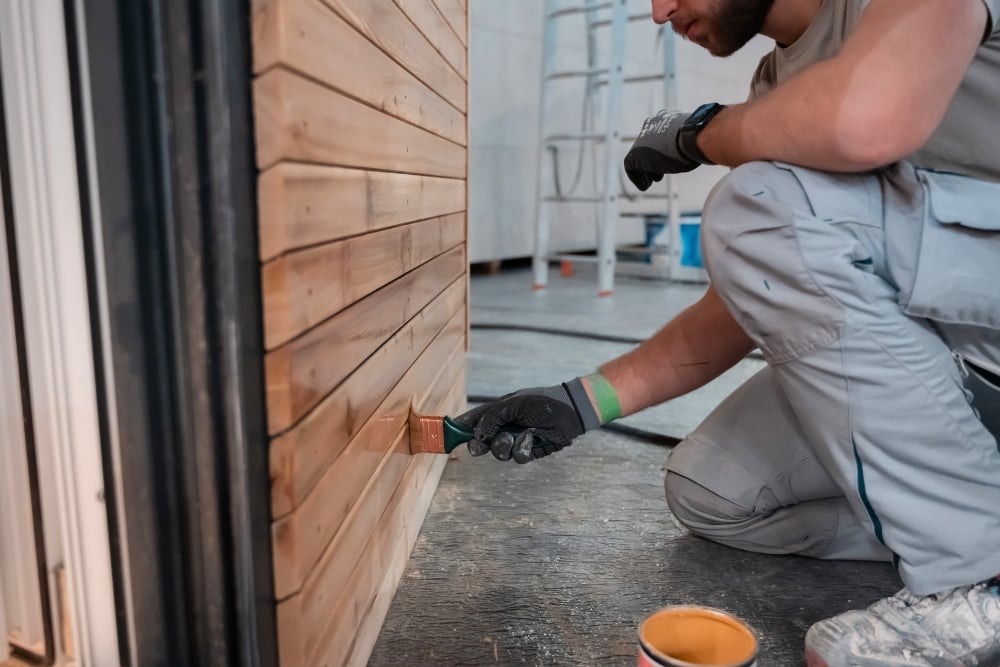
Fibre cement is what we see on most homes across the area, and it’s a solid choice. James Hardie HardieFlexT Sheet and Scyon Linea weatherboard are the most common products. Both handle moisture well, resist termites, and won’t warp or rot like natural timber can.
You’ve got a decent range of profiles to choose from too, so it doesn’t have to look like every other house on the street.
You’re looking at repainting every 10 to 15 years, which is a lot better than bare timber. Installed, it typically runs $80 to $130 per square metre depending on the profile and finish.
Brick and Brick Veneer
Brick is about as close to zero maintenance as cladding gets. A well-built brick home will outlast the building itself. You’re mainly looking at a clean and some mortar repointing every 20 to 30 years. That’s it.
It also gives you real thermal mass. The house stays cooler in summer and holds warmth in winter without any extra effort. Brick veneer, which uses a single brick leaf tied to a timber or steel frame, is how most residential projects are done. Budget around $180 to $260 per square metre installed locally.
Colorbond Steel
Most people think of Colorbond as a roofing product, but it works well as wall cladding too, particularly on contemporary or rural-style homes. It won’t corrode, won’t need painting, and holds up in coastal conditions that would cause real problems for cheaper materials. Depending on the profile and how close you are to the water, manufacturer warranties run up to 30 years.
As wall cladding, you’re typically looking at $70 to $110 per square metre installed. It’s also significantly lighter than masonry, which can matter depending on your site and frame.
Decking and Outdoor Timber
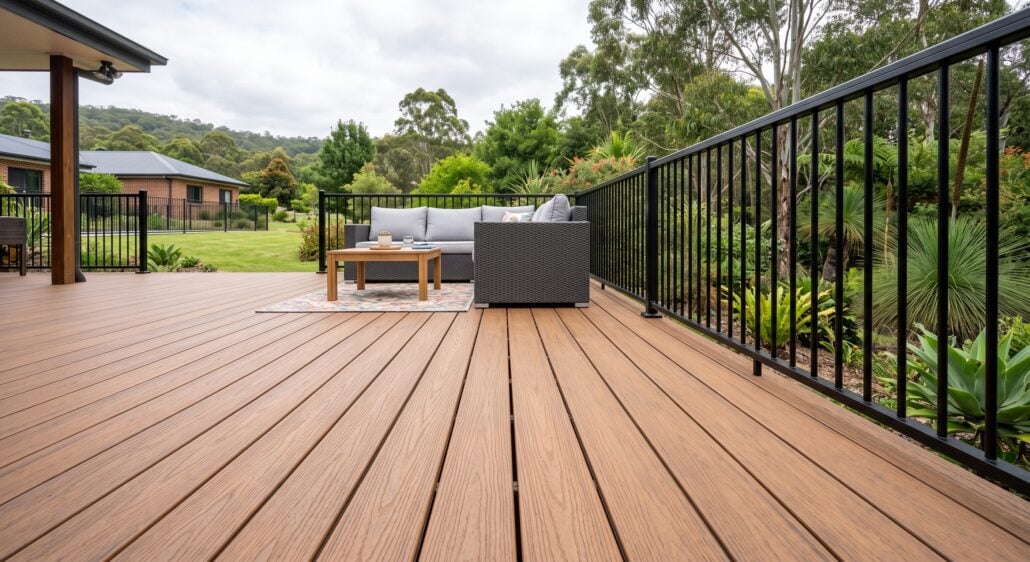
The deck is usually the thing people are most excited about and the thing they end up most frustrated by. Natural hardwood like spotted gum or blackbutt looks great, but it needs oiling once or twice a year to keep that colour. Skip the oiling and it goes silver-grey. It holds up fine structurally either way, it just depends whether you mind the look.
Composite decking changes the equation entirely.
A blend of recycled timber fibre and polymer, composite doesn’t splinter, doesn’t need oiling, and resists mould. It costs more upfront, typically $180 to $280 per square metre installed compared to $120 to $200 for hardwood, but once it’s down, you’re done. No annual oiling, no checking for damage, no real maintenance schedule at all. If that’s what you’re after, it’s worth the extra cost.
If you’re at the stage of thinking about what an outdoor area could look like, the scope of work involved depends heavily on what already exists. We walk through that as part of every renovations and extensions project, so material choices and what’s actually being built get worked out together from the start.
One thing that catches people out is choosing materials before the approvals are sorted. If you’re adding a deck or extending, check what permits are needed before starting an extension first. Council conditions can change what you’re allowed to build, which means material selections made too early sometimes have to be revisited.
Internal Surfaces
Kitchen Benchtops
Engineered stone like Caesarstone and Essastone has become the go-to kitchen benchtop and it deserves that reputation. Non-porous, stain-resistant, and no sealing required. Marble and granite look stunning but they do need periodic sealing and they mark easily. Red wine and lemon juice both leave their trace if you don’t catch them quickly.
Floors and Wet Areas
If you’re choosing between porcelain and standard ceramic tiles, go with porcelain. It’s harder, less porous, and handles moisture, stains, and scratches much better. Large-format porcelain also means fewer grout lines, which matters a lot in bathrooms and laundries. Grout is usually the first thing to look tired and it’s a pain to keep clean.
Engineered timber flooring looks like solid hardwood but handles our climate better. It doesn’t cup or warp with temperature and humidity changes the way solid boards can, and most products can be sanded and refinished two or three times, so it stays looking good for a long time.
Kids and pets are hard on floors. Hybrid flooring handles both well. It’s waterproof, takes scratches without showing them as badly, and cleans up easily. You get the timber look without the ongoing care that real timber needs.
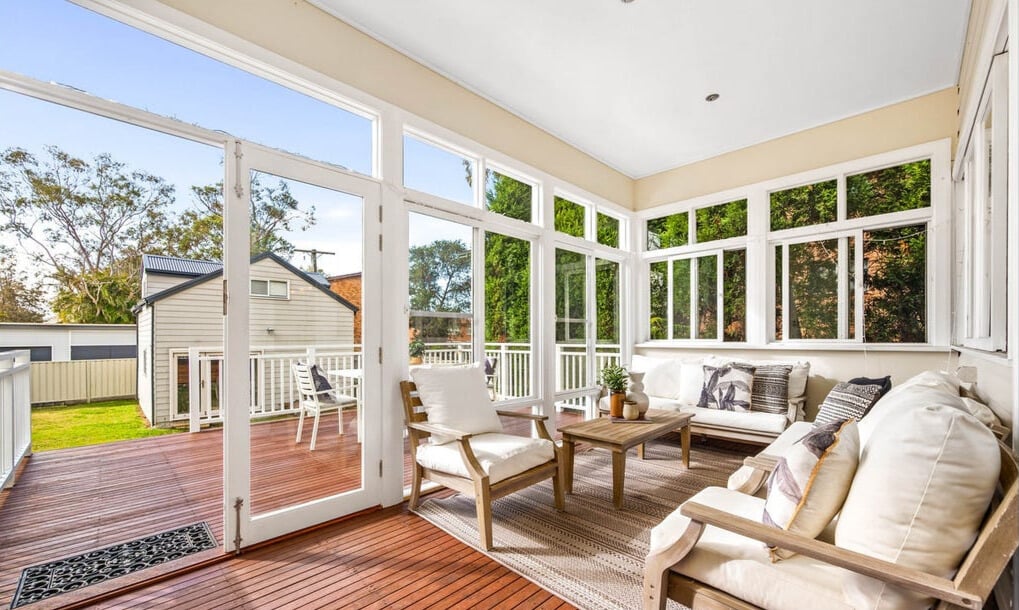
Windows and Doors
Aluminium frames are what you’ll find in most Australian homes, and they’re there because they work. Lightweight, affordable, corrosion-resistant, and almost no ongoing maintenance. Powder-coated aluminium holds its colour well. A wipe down every now and then is about all it needs.
Timber frames look warmer and perform better thermally, but they need repainting or re-staining every five to seven years. Some manufacturers now make aluminium-clad timber frames. Timber on the inside for the look, aluminium on the outside to handle the weather. It’s a reasonable middle ground if you want both.
The earlier that conversation happens, the more options you actually have. By the time a custom home build in Newcastle or the Hunter Region is at lock-up stage, coastal exposure, orientation, and budget have already shaped the structure, and the window frame choice is often the first thing that gets value-engineered out.
Roofing
Colorbond is the most common roofing choice on new builds across Australia, and it’s easy to understand why. It’s light, handles extreme weather without fuss, and manufacturer warranties run 25 to 36 years depending on the product and your location. It won’t crack, rot, or grow the moss problems you see on concrete tiles over time.
Concrete and terracotta tiles are heavier, but they offer genuine thermal mass and can last 50 years or more. The trade-off is that individual tiles crack from hail or foot traffic and shaded areas tend to get moss over time. Neither problem is serious, but if you want a roof you genuinely don’t have to think about, tiles ask a bit more of you than Colorbond does.
Choosing the Right Materials
The honest answer is that the best material depends on your block, your budget, how close you are to the water, and how much time you actually want to spend on upkeep. There’s no universal right answer.
What we do know from experience is that the projects with the lowest long-term maintenance costs are the ones where these decisions were made early, before budget pressure started forcing compromises. Cladding, roofing, and flooring all need to be in the conversation at the design stage, not decided at lock-up when there’s no room left to move.
The question then is when each decision needs to happen and what depends on what. That sequencing is something we cover in detail when we talk about how to manage project timelines and avoid delays, because getting that order wrong is one of the most common reasons budgets blow out.
If you want to dig into Australian standards and material guidance independently, the Housing Industry Association (HIA) publishes material guidance relevant to residential construction across Australia. [Web team note: open in new tab]
If you’re planning a build or renovation around Newcastle or Lake Macquarie, we’re happy to talk through the options with you. Get in touch with the Extrabuild team and we’ll work through what makes sense for your home, your block, and the way you actually use the space.
Frequently Asked Questions
What’s the most durable exterior cladding for a coastal property?
Powder-coated aluminium, Colorbond steel in a coastal-rated profile, and brick veneer are all solid choices close to the water. Fibre cement with a quality paint system is fine too, but you’ll need to repaint it more often than you would further inland. The thing to avoid is untreated or lightly treated timber in an exposed position. The salt air will work on it faster than you’d expect.
Is Colorbond or concrete tiles the better choice for roofing locally?
For a low-maintenance roof, Colorbond is the better choice. It’s lighter, needs almost no upkeep, and the manufacturer warranties are strong. Concrete tiles give you more thermal mass and a traditional look, and they can last 50 years or more. They’re not a bad choice, they just ask more of you over time. If you’re building new and you want a roof you can genuinely forget about, go with Colorbond.
How long before fibre cement cladding needs repainting?
With a quality paint system, you’re typically looking at 10 to 15 years before it needs repainting in our climate. Using a well-known brand like James Hardie and putting a decent exterior paint on it from the start will push you toward the higher end of that. Cheap paint on cheap board, and you’ll be back at it a lot sooner.
What’s the best decking material for a low-maintenance outdoor area?
If you want something you don’t have to maintain, composite is the answer. No oiling, no splinters, and it handles mould better than timber. Natural hardwood looks better out of the gate, but it needs oiling every year to keep that colour. A lot of people start with good intentions and then the oiling falls behind. Once it does, it’s harder to bring back. Composite removes that variable entirely.
Does Extrabuild help with material selection during the design phase?
Yes, and it’s genuinely one of the most useful conversations you can have early in the process. We go through your site, your budget, and what you’re actually planning to do with the space, then work through the options before anything is locked in. Getting it right at the start saves a lot of back-and-forth later.